Day 4 at Vancouver Fashion Week: Structure and Seduction
Day 4 of Vancouver Fashion Week (VFW) featured an array of designers who followed their mandate to promote diversity. Designers from Europe and Japan, as well as two Mexican-born designers educated and originating their brands in Vancouver, made up the diverse runway. The second designer on the catwalk was Manuel Juárez of Physalia, who delivered a collection that excited the audience with his sensual power dressing for women.
Designer Profile: Manuel Juárez of Physalia
Manuel Juárez was born in Mexico and is now based in Vancouver, and that sense of movement—between places, disciplines, and ideas—really comes through in his work. His background spans fashion, media, and film, which gives him a strong instinct for storytelling. After studying at JCI Institute, he developed an approach to design that feels considered rather than decorative. For Juárez, clothing isn't just about appearance—it's about how it shapes the body and, in turn, how the body moves through the world.
Through his label, Physalia, that perspective becomes something you can actually feel in the garments. There's a clear respect for construction and materials, and he oversees the construction in his hometown of Puebla, Mexico. There's a quiet emotional thread running through the work. Pieces are designed to hold their form while also moving with the wearer, revealing a kind of sensuality that doesn't rely on obvious exposure. It comes through in the cut, the fabric's weight, and the way it falls. There's a confidence in that restraint—it doesn't need to prove itself.
PHYSALIA
The Collection: FASTIGIUM; A REVIEW
For Fall/Winter 2026, Juárez presents FASTIGIUM, a collection that explores the tension between structure and vulnerability—a theme that feels particularly resonant in today's fashion landscape, where identity is fluid but presence remains paramount. Manuel Juárez told me the collection is all about empowering women while making them feel comfortable in their skin.
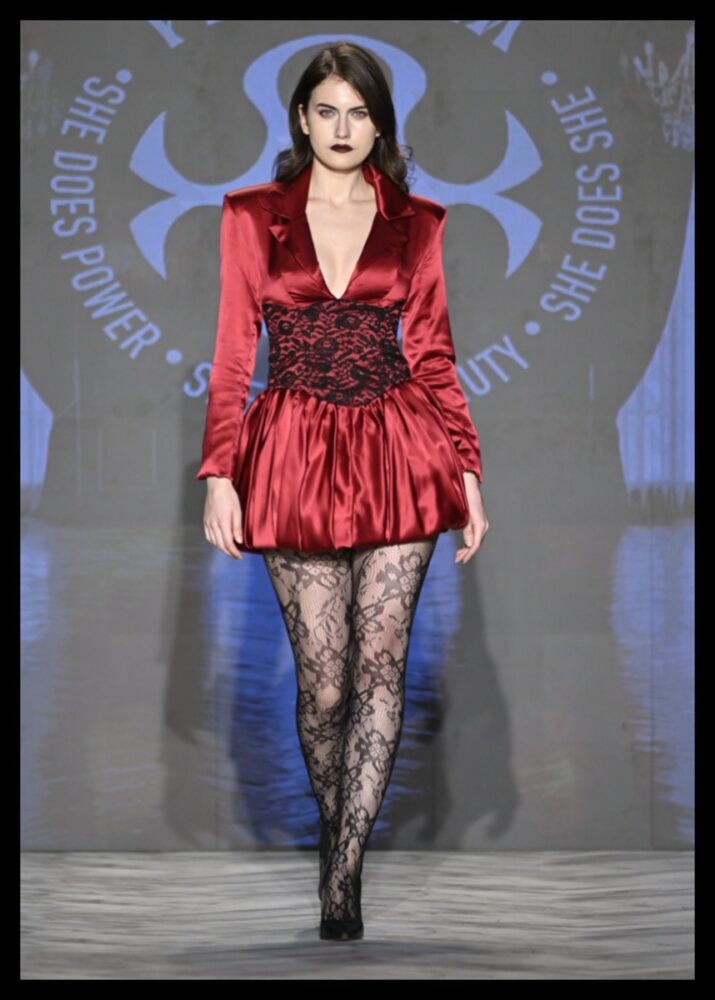
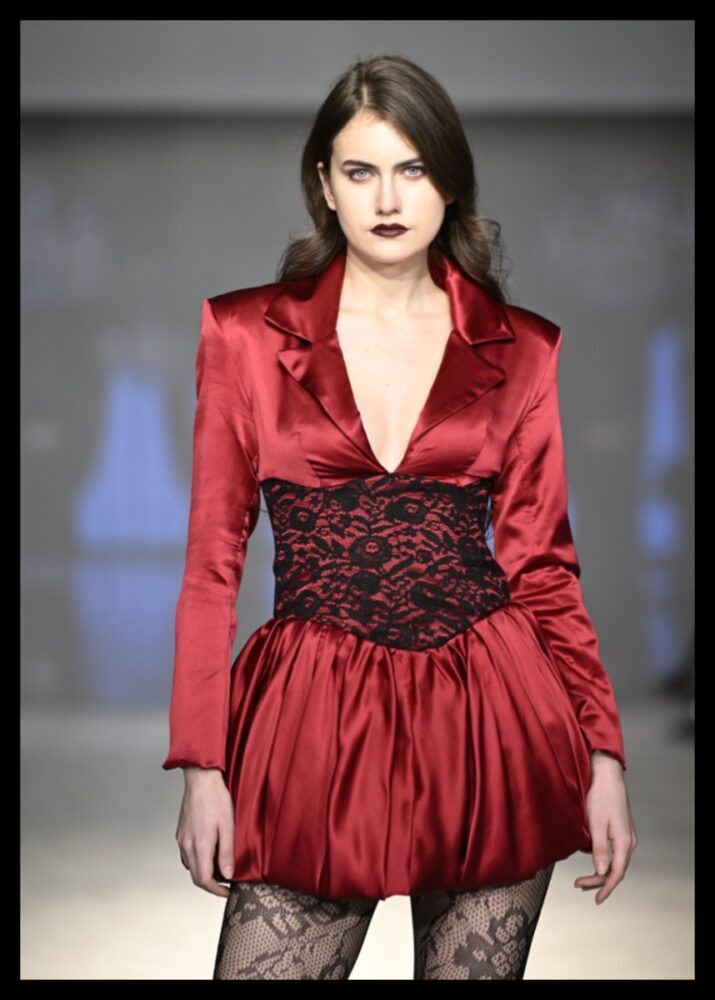
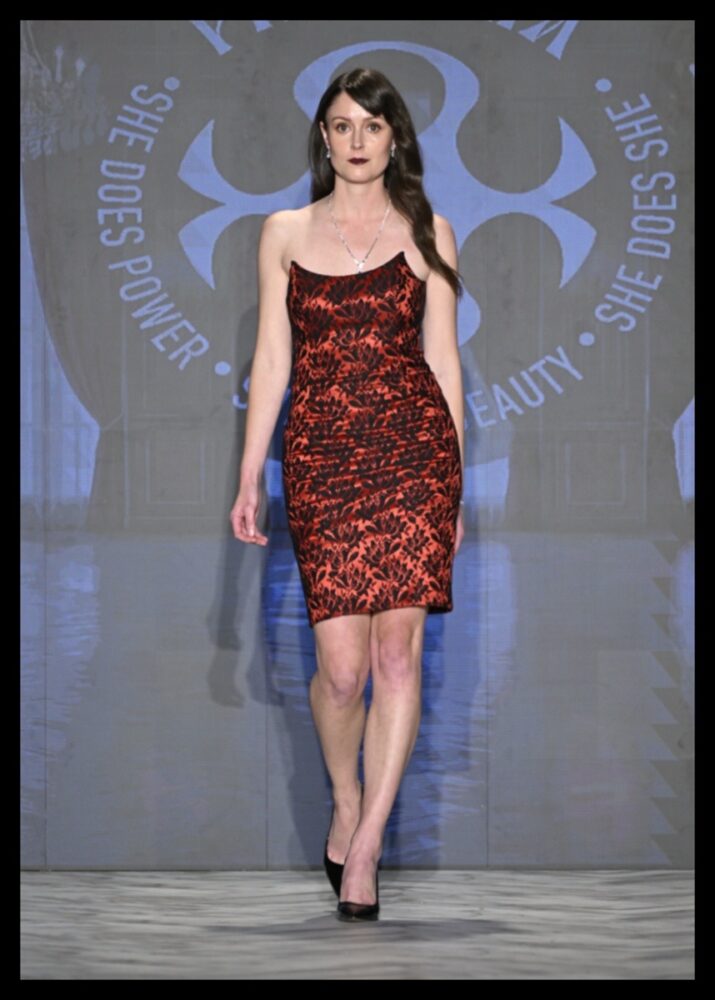
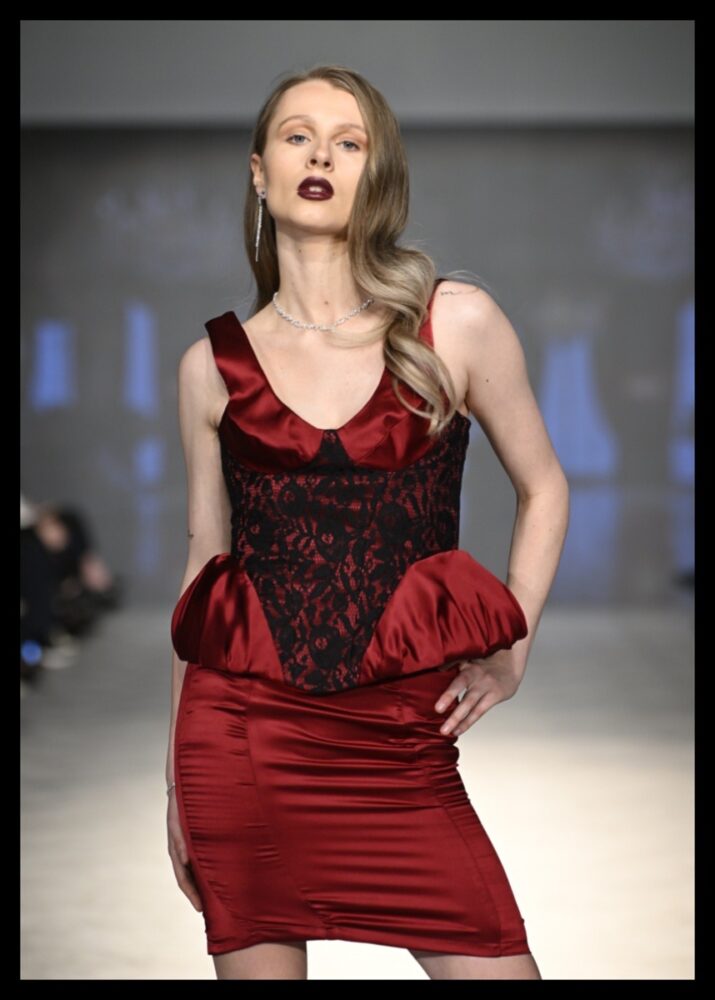
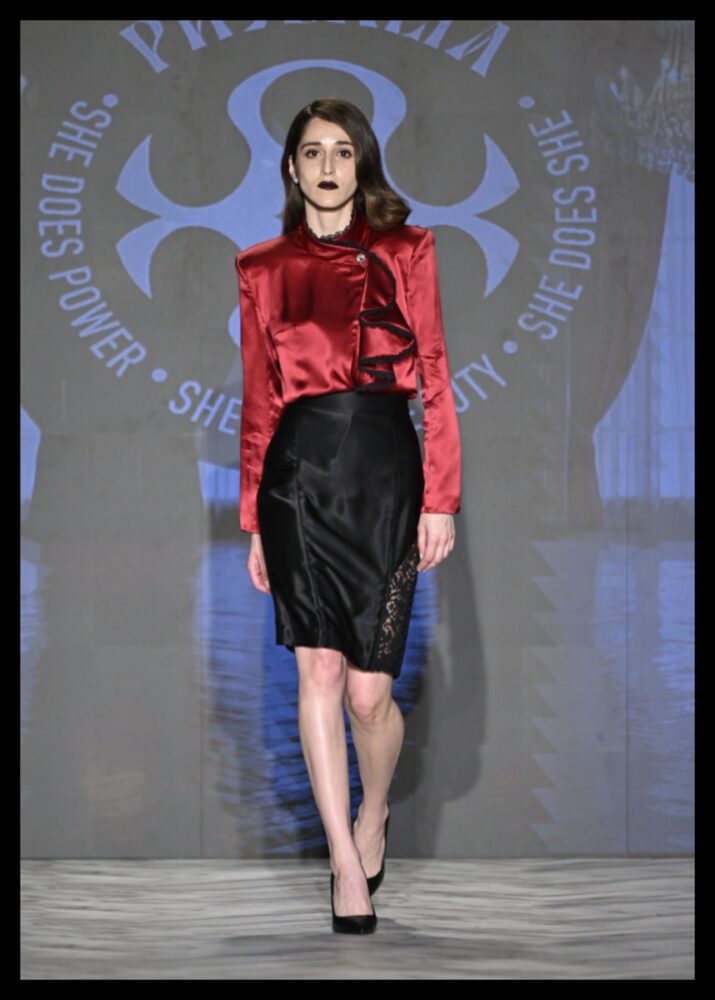
The tone for the collection was set immediately. Juárez leaned into tailoring and corsetry to express his belief in women's empowerment. Sculpted shoulders and sharply defined waists create a sense of authority, almost ceremonial in their precision. Juárez softens these architectural lines with volume; billowing skirts, layered peplums, and flared sleeves that introduce movement and breath. There's a constant push and pull: control versus release, discipline versus desire.
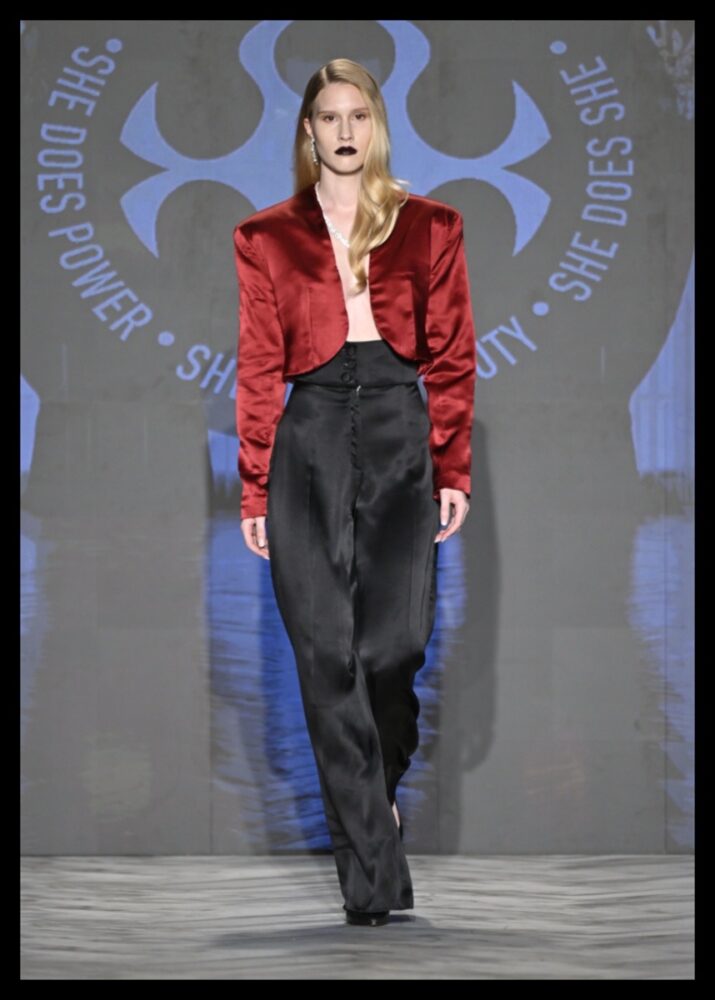
And then comes the variety. Dresses, tailored separates, and hybrid pieces that blur traditional categories. A blazer becomes something more sensual when paired with lace. A structured mini dress gains fluidity through layered ruffles. This is not a collection interested in binaries—it thrives in the in-between. The designer produced a modern, sophisticated collection that drew on his Mexican roots, featuring tiered ruffles and a cropped bolero jacket.
PHOTOS COURTESY OF VANCOUVER FASHION WEEK
PHOTOGRAPHER ARUN NEVADER

1st Look

2nd Look

3rd Look
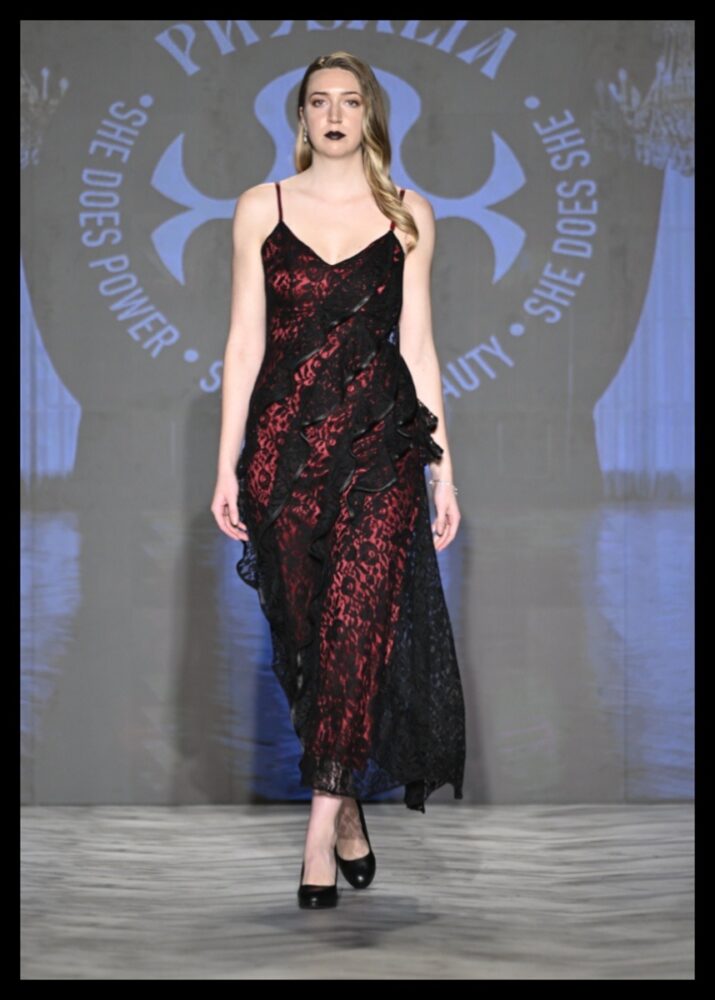
4th Look
5th Look
6th Look
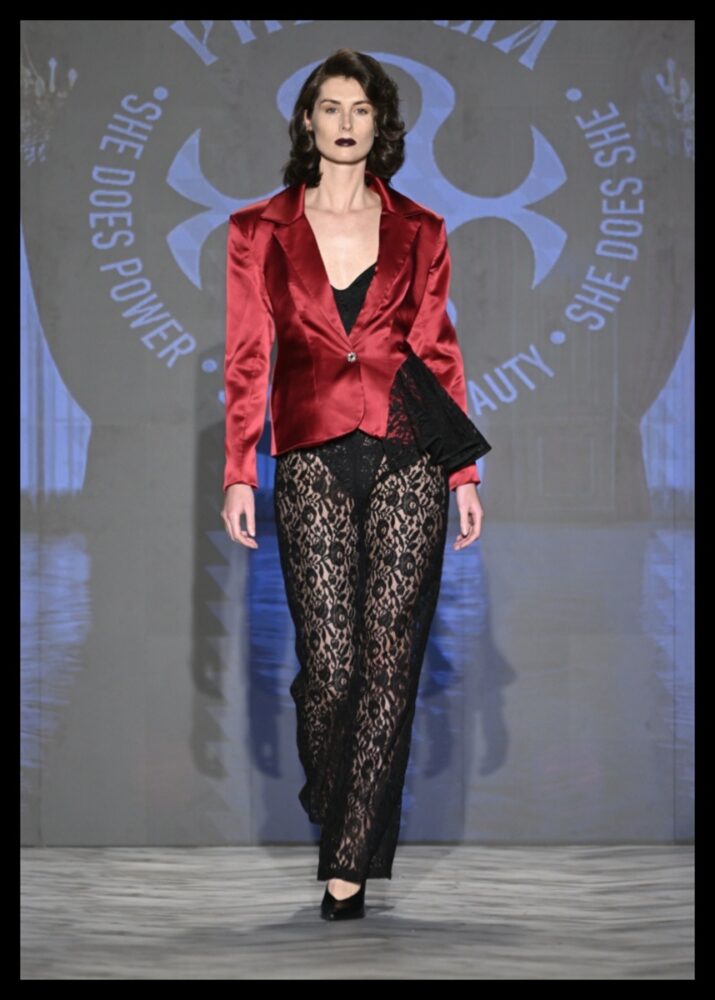
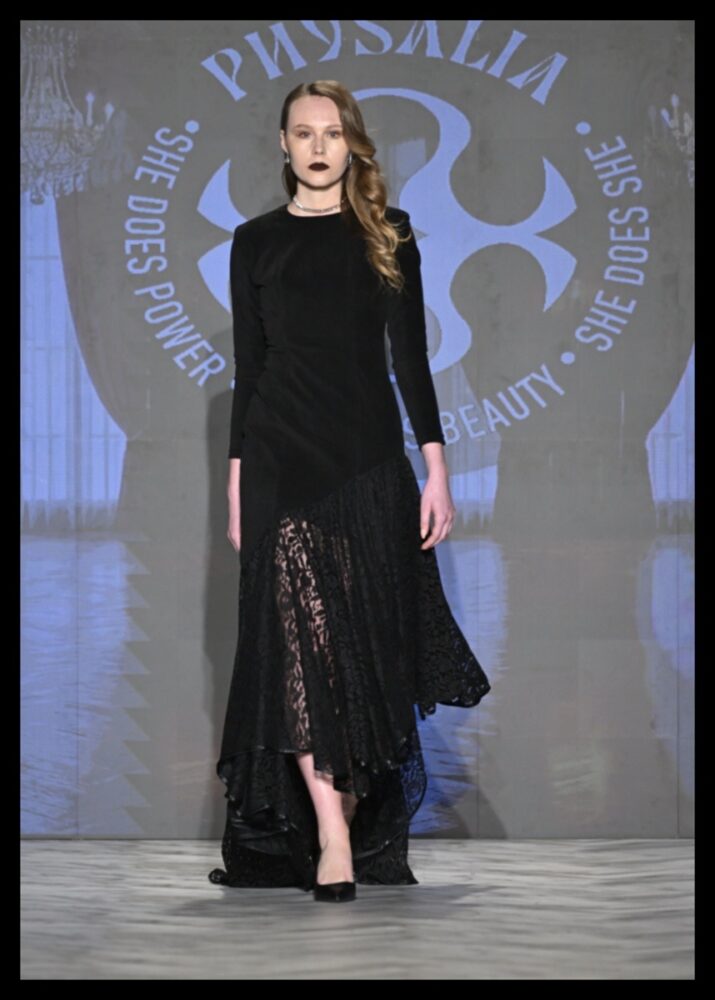
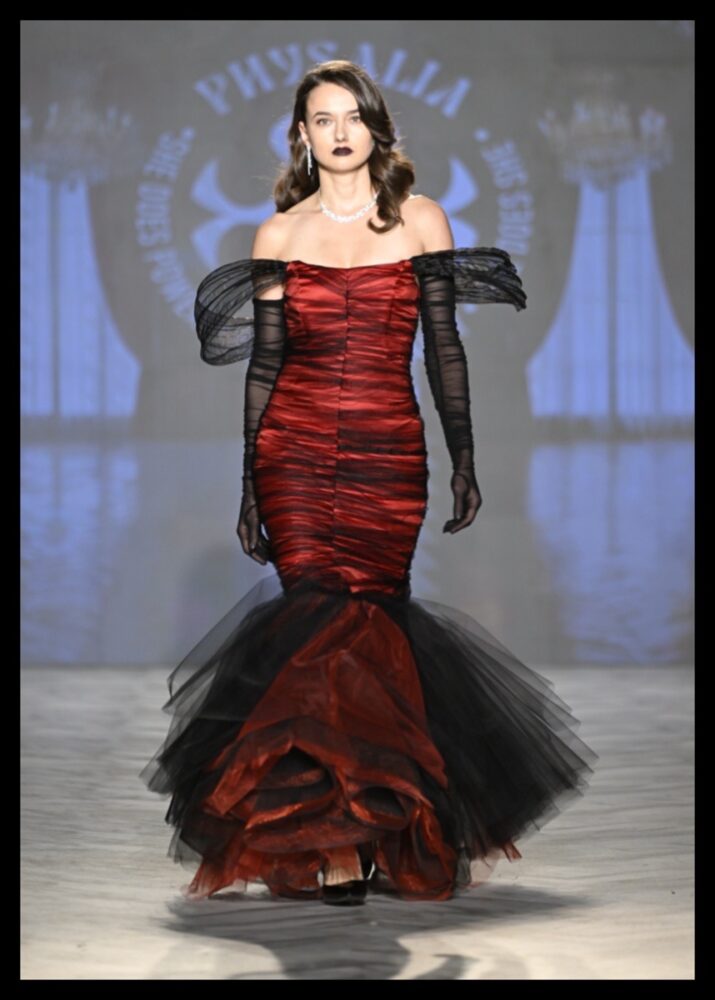
Colour plays a deliberate role. Obsidian black and deep, lacquered red dominate the palette, evoking both strength and seduction. It's giving gothic romance, but edited—less Dracula, more modern-day femme power with a sharp editorial edge. The red, in particular, feels alive. Not passive, not decorative, but assertive. A colour that doesn't ask permission.
Fabric, too, becomes language. Heavy silks and satins provide structure and weight, grounding the collection, while intricate lace introduces transparency and fragility. The interplay between these materials is where Juárez truly excels. Lace is not used to reveal—it's used to suggest, to create tension, to soften the severity of tailored forms without diluting their impact.
Runway Highlights: A Study in Contrast - PHYSALIA
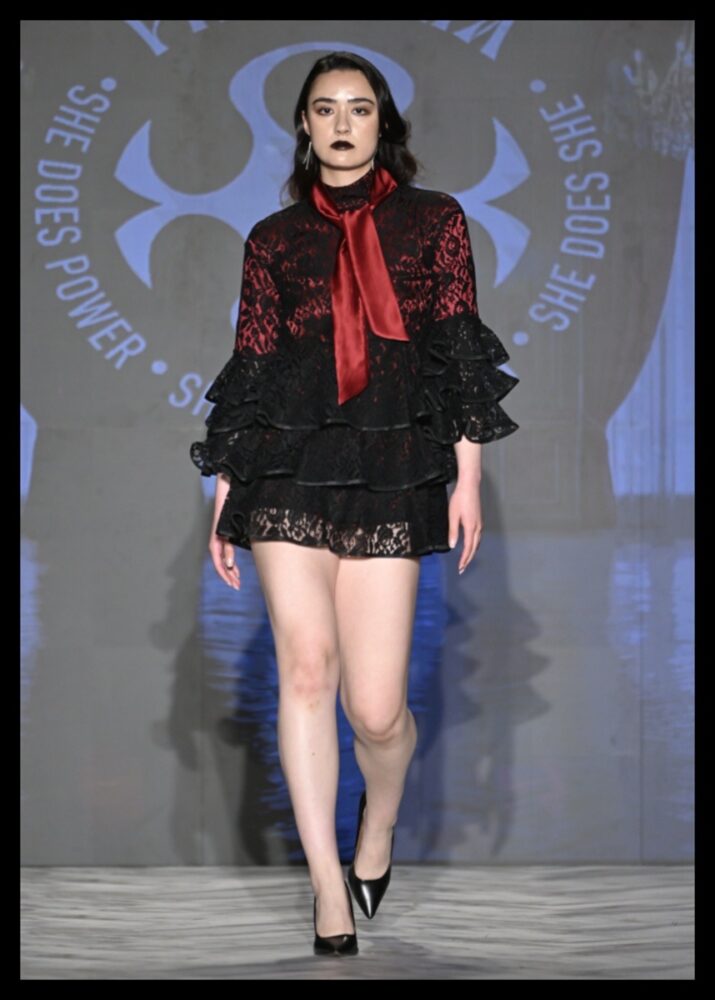
The collection offers an array of looks that cement this young designer's place as someone to watch. Look 3 projects confidence—a black lace mini layered in cascading ruffles, punctuated by a deep red satin tie that cuts through the softness with a sharper, almost subversive edge. By Look 7, the tension between control and vulnerability comes into focus, pairing a structured red satin blazer with sheer lace trousers in a way that feels deliberate and self-assured. Look 8 builds on that idea, with its sculpted lace bodice and voluminous red satin skirt bringing both precision and movement into play. Then the finale, Look 10, arrives with full drama: a ruched, body-contouring red gown that hugs the figure before bursting into a cloud of black tulle at the hem, the off-the-shoulder neckline and sheer gloves adding a touch of old-Hollywood glamour with a darker, more modern edge. Together, these looks chart a clear progression—from suggestion to statement—ending on a bold, controlled, and unapologetically theatrical note.

7th Look

8th Look

8th Look

9th Look
10th Look
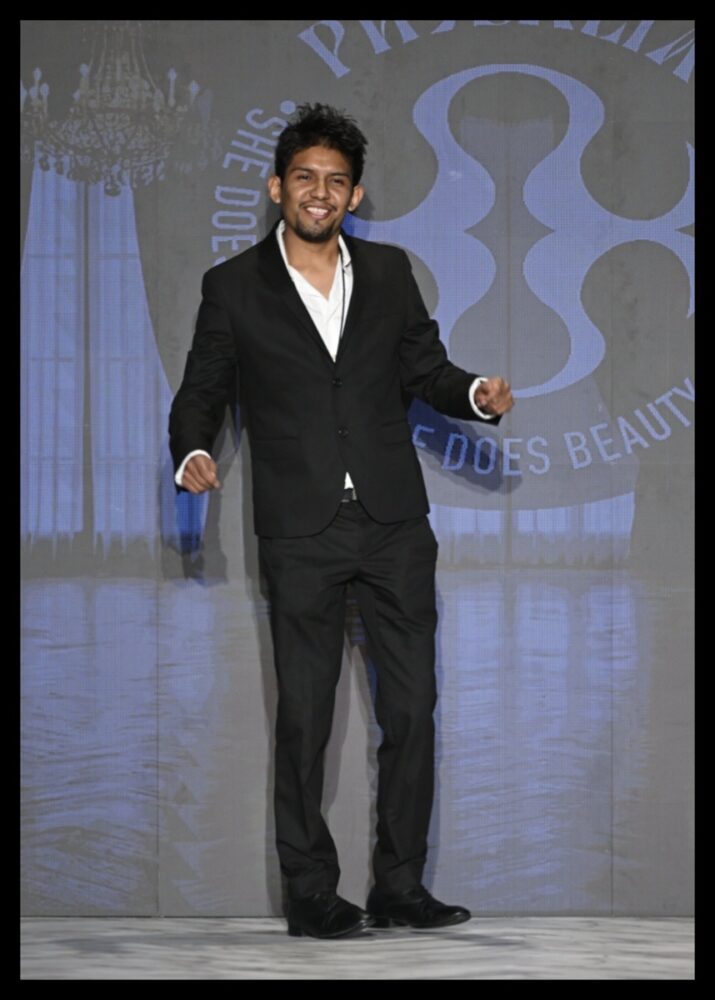
Manuel Juárez
Final Thoughts
What Manuel Juárez achieves with FASTIGIUM is something many designers strive for but few truly master: balance. Not compromise, but balance. Between structure and fluidity, exposure and restraint, emotion and control.
There's also something deeply personal here. I first met Juárez when he invited me to see his graduate collection from JCI. I was immediately impressed. I encouraged him to step onto this platform, to present at Vancouver Fashion Week. This ambitious young designer needed no encouragement to pursue his premier show. Manuel Juárez's show at VFW showed how he belongs on this platform, and I look forward to his many more successes.
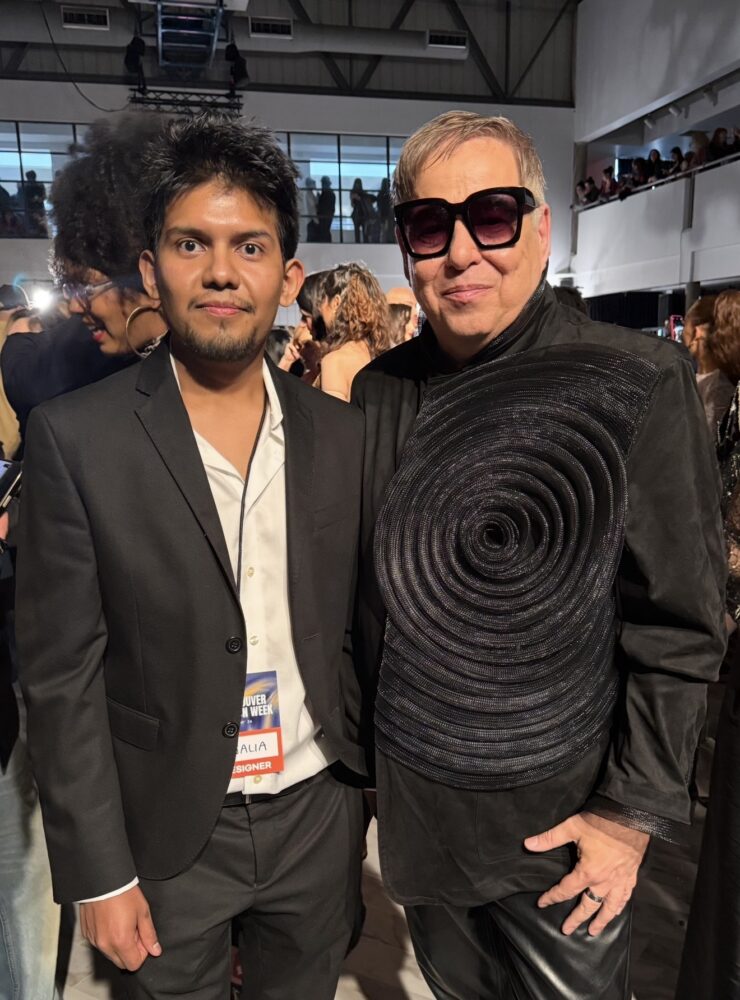
Manuel Juárez and I at Vancouver Fashion Week
For all my stories from Vancouver Fashion Week and more...
jandrewspeaks.com
Recent stories include;
A Preview of Vancouver Fashion Week
Hypnotique Sense at Vancouver Fashion Week
Bahare Karami at Vancouver Fashion Week
No Responses