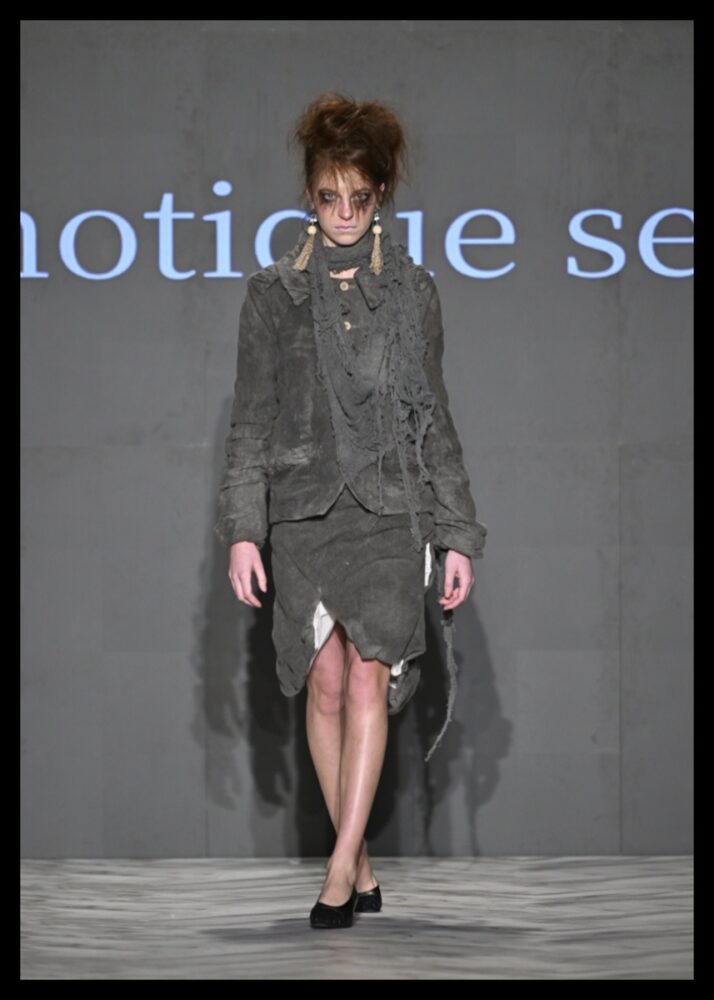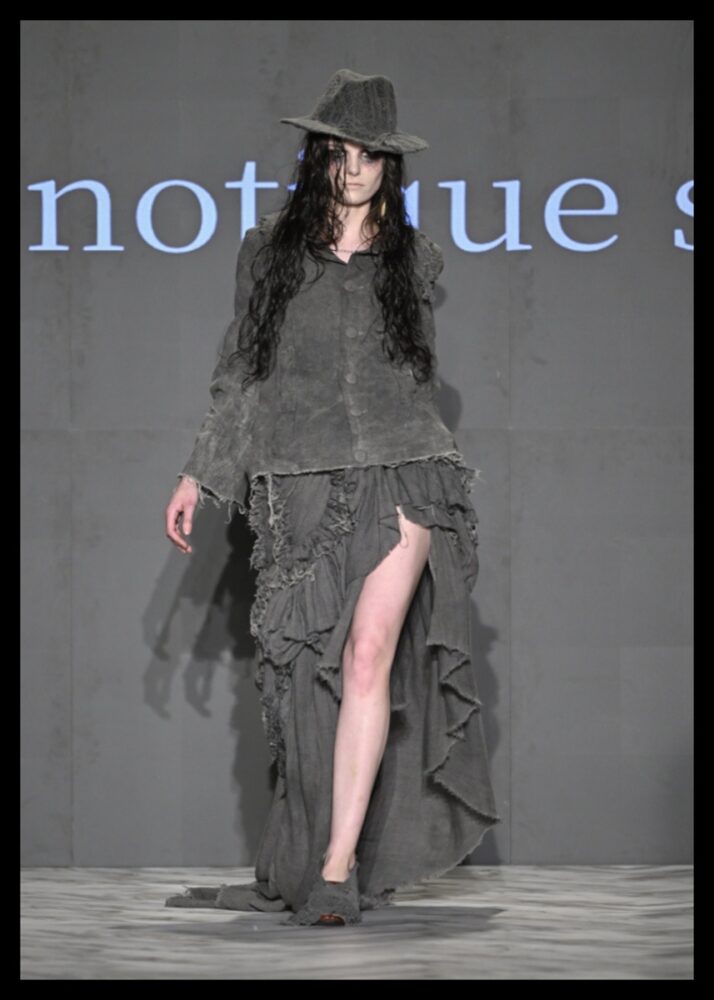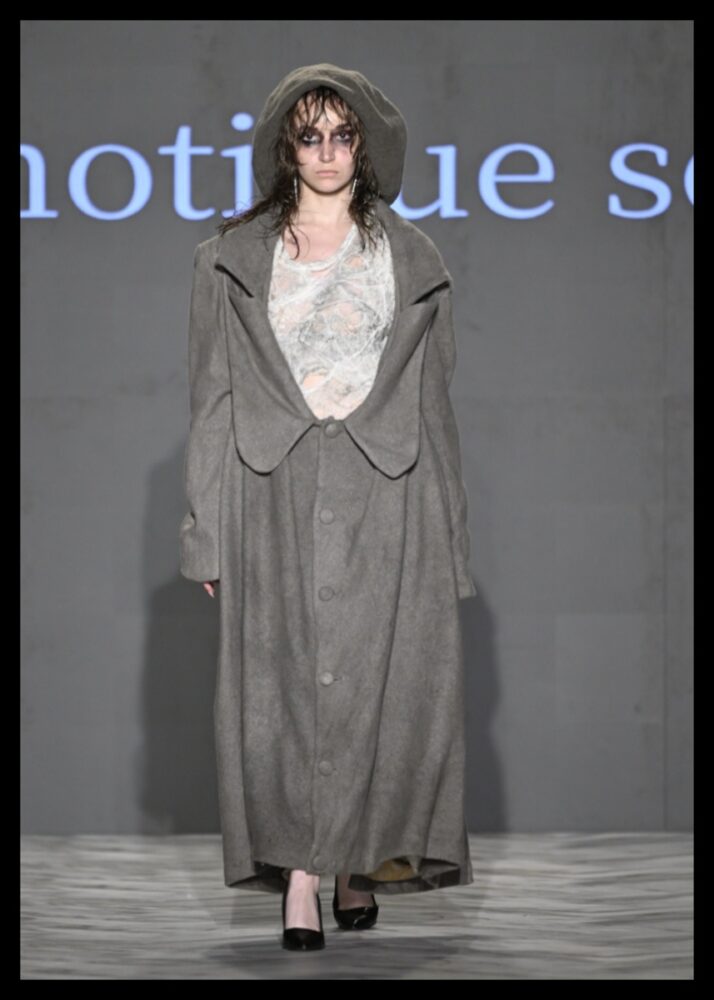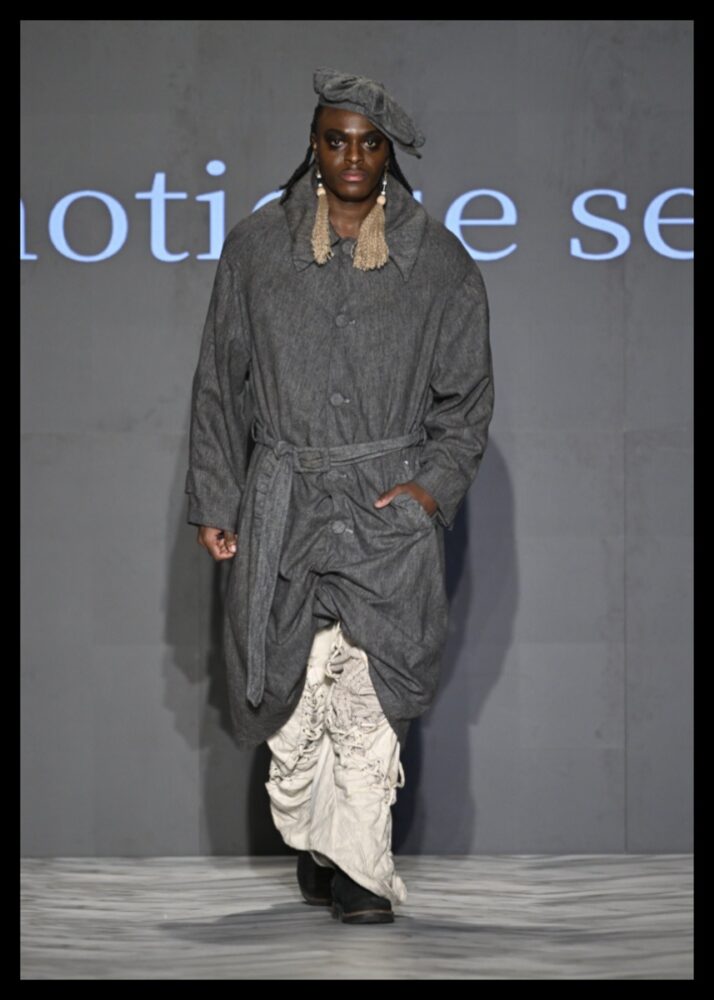
There's a certain electricity to opening night at Vancouver Fashion Week—that delicious moment when the lights dim, the first look steps out, and suddenly, the world feels just a little more imaginative. This season began with three strikingly different collections, each a reminder of what VFW does best: celebrating diversity in its truest form. Not just diversity of culture (though that is always beautifully present), but diversity of perspective, of aesthetic, of storytelling.
Perhaps deliberately, the opening-night lineup felt like a statement about what diversity truly looks like at Vancouver Fashion Week. Three collections, three entirely different fashion languages.
First, Richard Wei set the tone with a vision of modern glamour—elevated eveningwear that leaned into elegance and polish. Then came Ay Lelum, grounding the runway in cultural storytelling through designs that honour Coast Salish heritage through textiles and tradition. And finally, the focus of this post: Hypnotique Sense, delivering a conceptual collection of distinct, wearable pieces that blurred the line between art and garment.
Three designers, three perspectives—each one expanding the conversation of what fashion can be.
HYPNOTIQUE SENSE
This is the biography from the Vancouver Fashion Week website.
Reiju Sato (b. 2002) is a Japan-based fashion designer. He graduated from Bunka Fashion College in 2024, where he received the Grand Prix in an internal competition, and his work was exhibited at Première Vision Paris. In 2025, he placed 3rd in the Asia Pacific Emerging Designer Fashion Contest.
Drawing inspiration from objects left behind by time, his practice centers on deconstructing discarded T-shirts and transforming them into new materials. Working primarily with natural textiles treated through rust dyeing and charcoal dyeing, he explores the intersection where beauty and decay converge.
HYPNOTIQUE SENSE
A REVIEW
Hypnotique Sense brought its latest collection, "Ruinophilia," to the VFW runway. While the word hints at its description, I googled the term ruinophilia and found the following description;
Ruinophilia is the aesthetic, emotional, and intellectual fascination with ruins and decay, often described as "ruin lust". Coined to describe a contemporary obsession with the remnants of modernity, it represents a deep appreciation for the beauty of decayed buildings and monuments, blending nostalgia with a critique of progress.
It’s an idea that feels almost poetic: what happens when something breaks down, and in doing so, becomes something else entirely? RUINOPHILIA is a collection that lingers on decay, not as destruction, but as transformation. I sat down with designer Reiju Sato and, through a translator, he expressed that he wanted to find beauty and new uses for discarded items. The materials are the designer's tool, and in this case, those materials may be discarded T-shirts and other items, being reborn through the designer's process. That process includes dyeing and colouring, as well as fraying and manipulating the fibres. Material becomes narrative here. Rust dyeing, charcoal treatments, and botanical pigments allow each piece to evolve over time, creating a living dialogue between the organic and the constructed. Nothing feels static. Everything is in process.
PHOTOS COURTESY OF VANCOUVER FASHION WEEK
PHOTOGRAPHER ARUN NEVADER

Look 1

Look 2

Look 3
Look 4
Look 5
Look 6
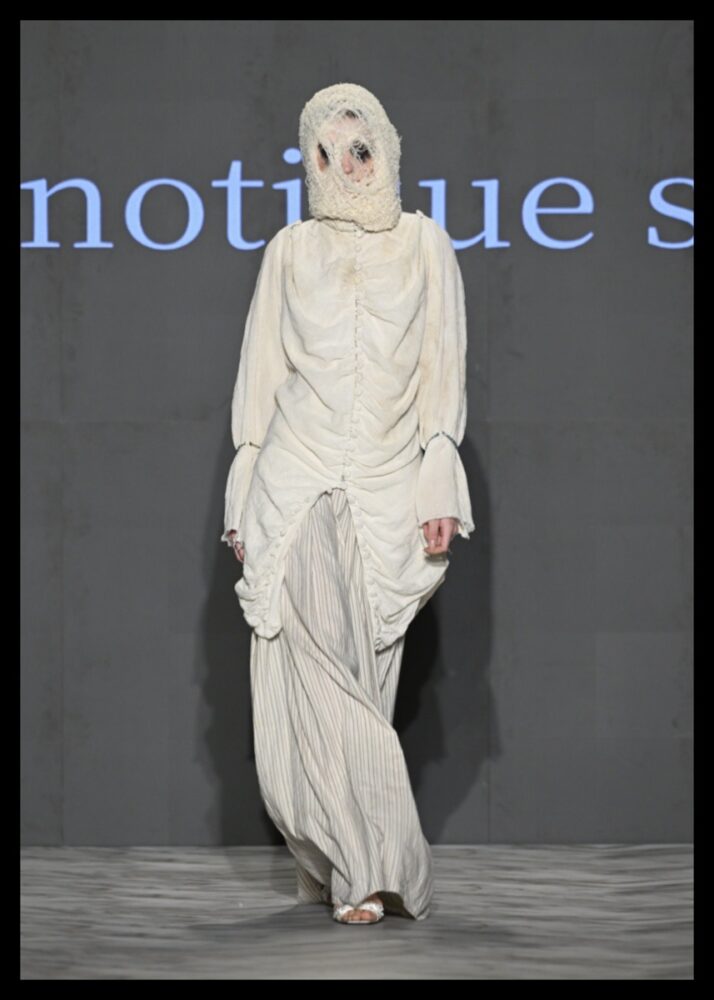
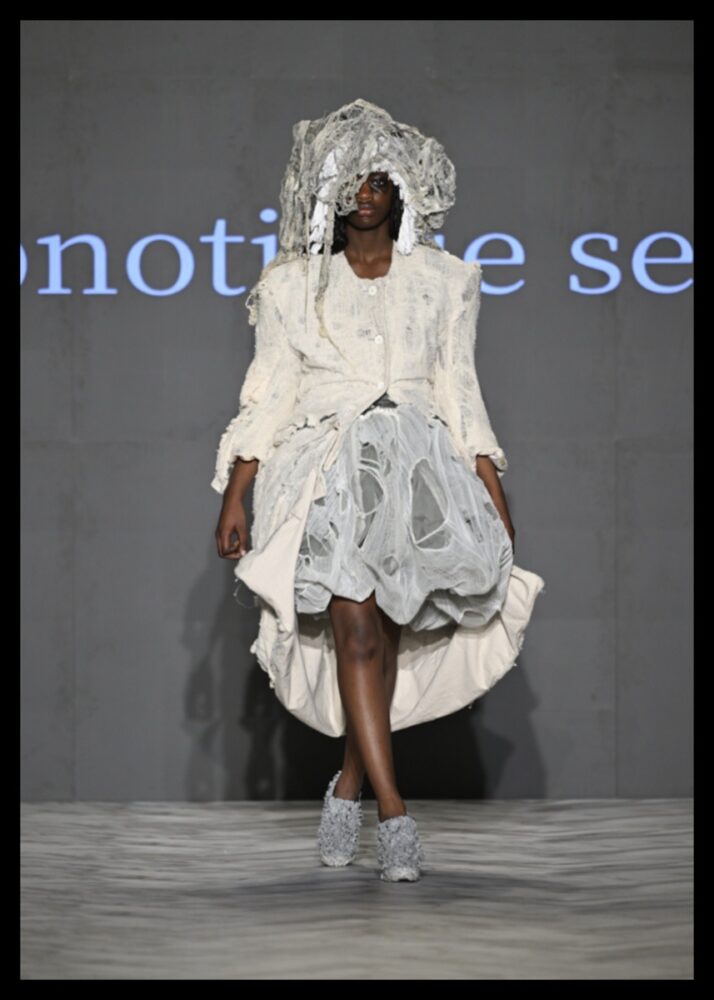
"Hypnotique Sense" is the feeling we, as an audience, have. The runway's tone is set by the first look. Look 1, a shrouded figure in beige glides down the runway. There is a sense of the avant-garde. The designer has designed with his concept of reclaiming decayed items. As conceptual as the collection seems, each look is made up of wearable pieces.
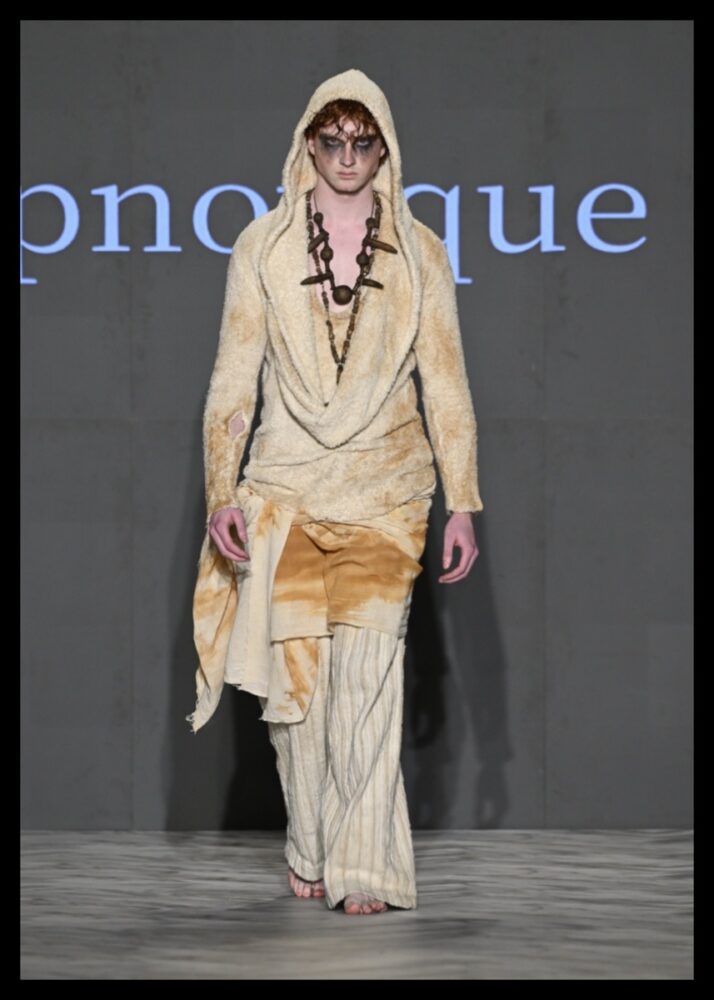
Look #3: a hooded, draped silhouette in weathered cream wraps the body with a monastic softness, balancing protection and sensuality. Earth-stained layers and talismanic accessories give the look a ritualistic, almost otherworldly presence. The look is made up of different separates: a hoodie-like top stained with rust splotches, paired with loosely structured, earth-stained trousers. The look plays with asymmetry and layering, creating a sense of quiet imbalance.
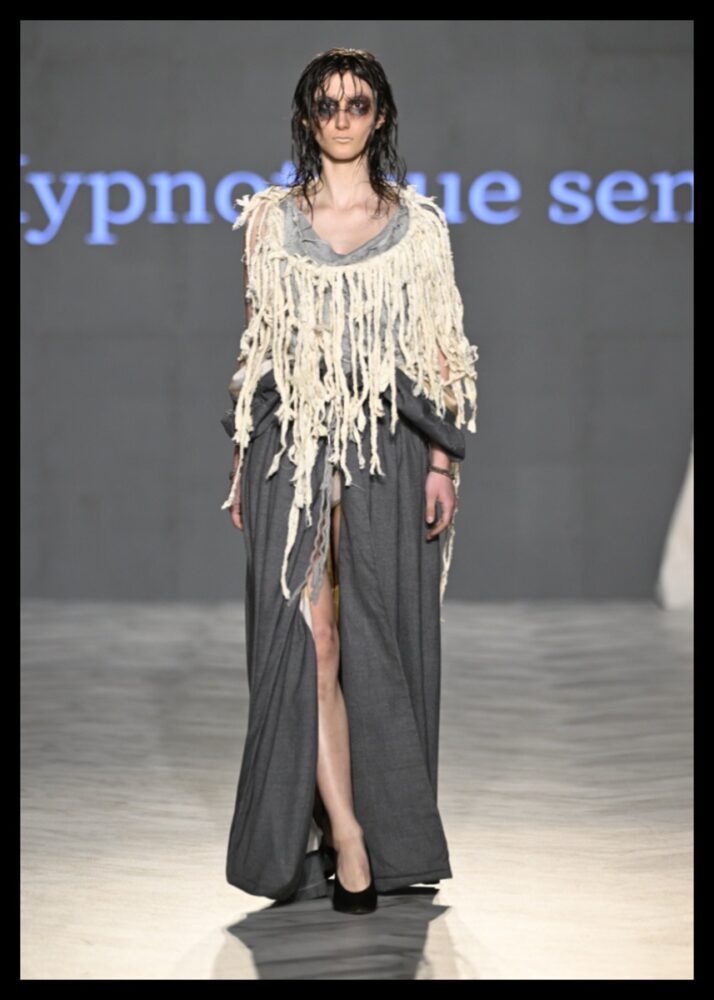
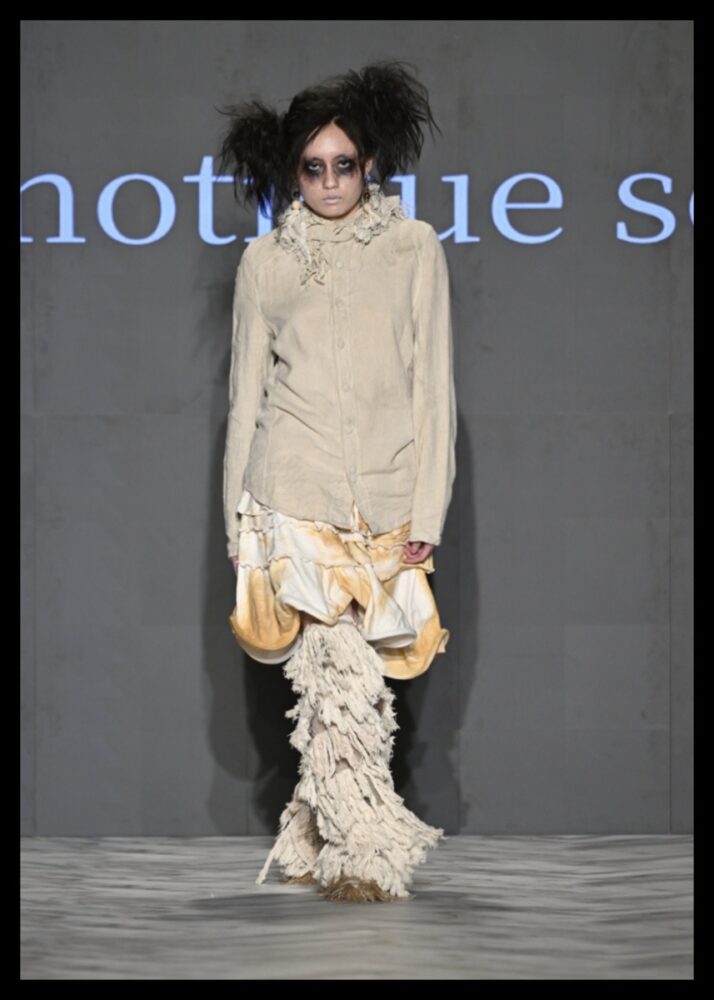
In look 4, the fragility intensifies. A buttoned blouse, deceptively simple in shape, becomes a canvas for subtle decay—its muted tone washed with irregular pigment, like fabric left to weather the elements. Beneath, a softly gathered skirt blooms outward, its hem tinged with warm, almost burnt hues. But it’s the texture below that steals the moment: heavily fringed, almost unravelling trousers that move like a living organism with each step. There's a beautiful tension here between restraint and chaos. The styling—those exaggerated, undone pigtails and hollowed eyes—leans into a kind of surreal innocence, as if we're witnessing a fragment of a memory rather than a fully formed reality.
A shoutout goes to the makeup team who created the haunting makeup for this collection.

Look 7

Look 8

Look 9

Look 10

Look 11
Look 12
In Ruinphilia, Hypnotique Sense delivers a collection that is unapologetically conceptual—rooted in art, emotion, and the poetry of decay—yet never loses sight of the body it dresses. This is where the magic lies: garments that provoke thought but remain deeply wearable. The drape, the texture, the movement—all translate effortlessly from runway to reality, inviting the wearer into the narrative rather than placing them outside of it. It’s a delicate balance, and one Hypnotique Sense achieves with quiet confidence. Because while the ideas may be complex, the clothes themselves? They simply belong.
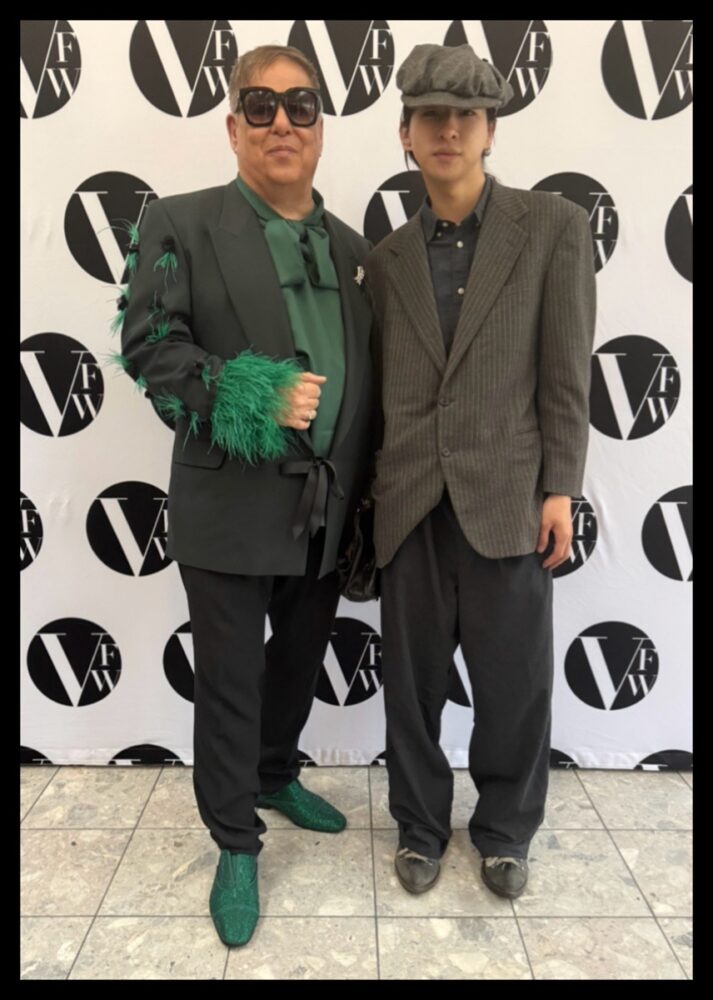
I AND DESIGNER REIJU SATO AT VANCOUVER FASHION WEEK
For all my stories from Vancouver Fashion Week and more ...
jandrewspeaks.com
Recent stories include: A Preview of Vancouver Fashion Week F/W 2026
CIAO FOR NOW J. ANDREW
No Responses